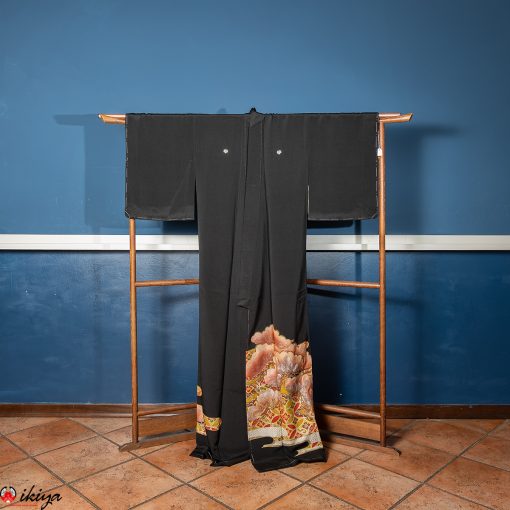
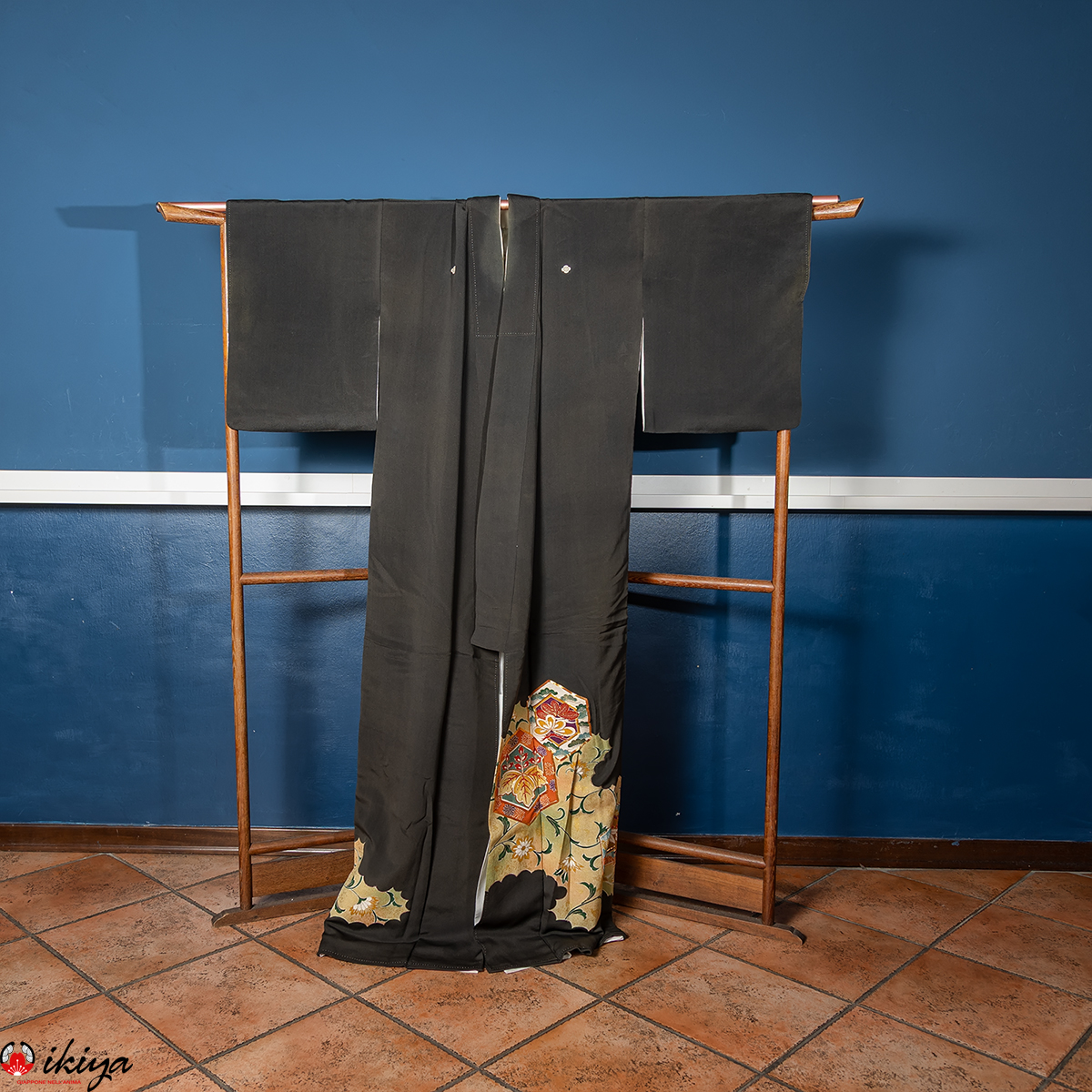
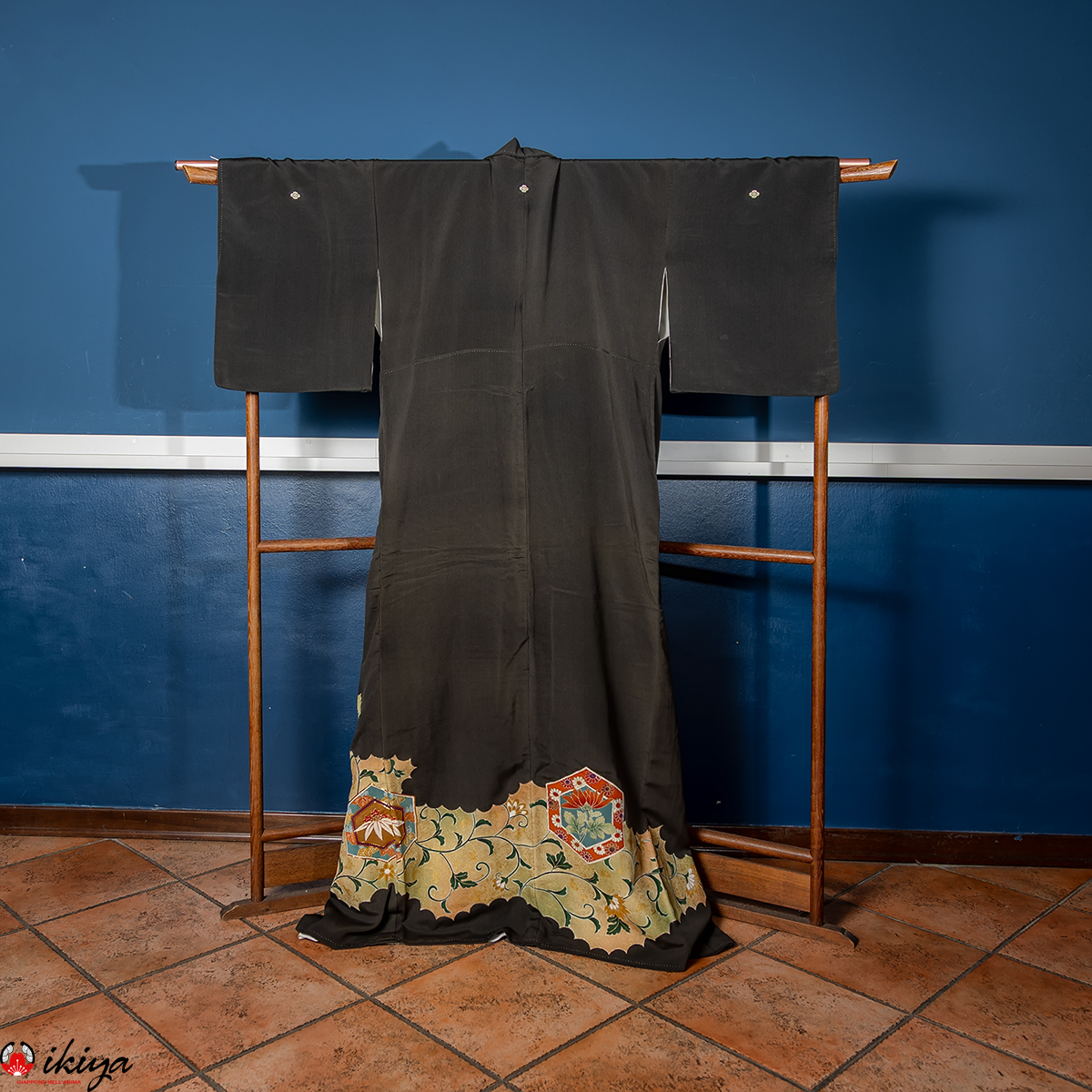
Vintage black silk kurotomesode with flowers and kikko motif
A symbol of longevity and good luck: the vintage black silk kurotomesode with flowers and kikko motif. A unique garment, perfect for lovers of Japanese culture.
€ 230,00 VAT included
Material: 100% silk (double lining: decorated black exterior, white interior with slight signs of wear not visible from the outside)
Condition: vintage in excellent condition
Origin: Japan
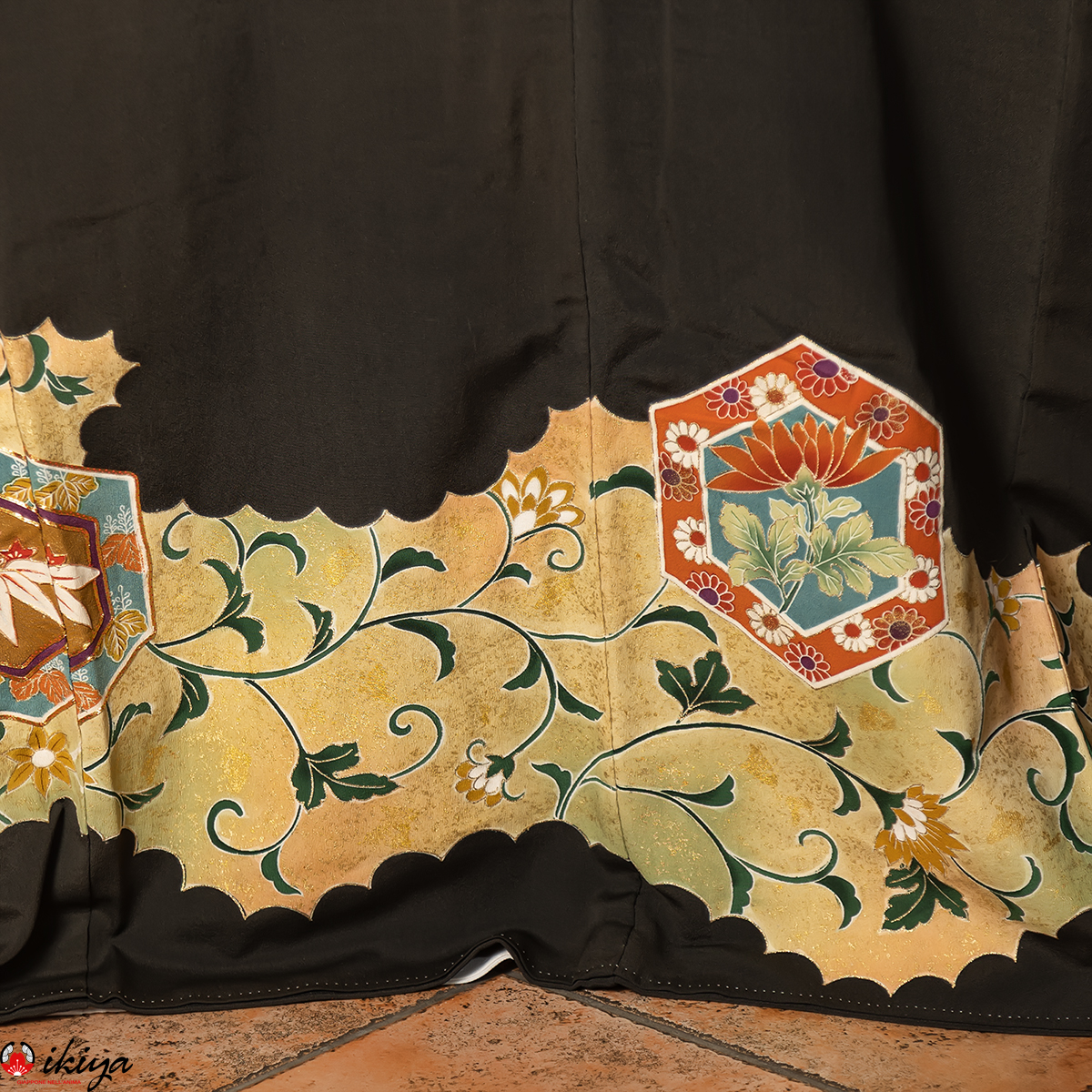
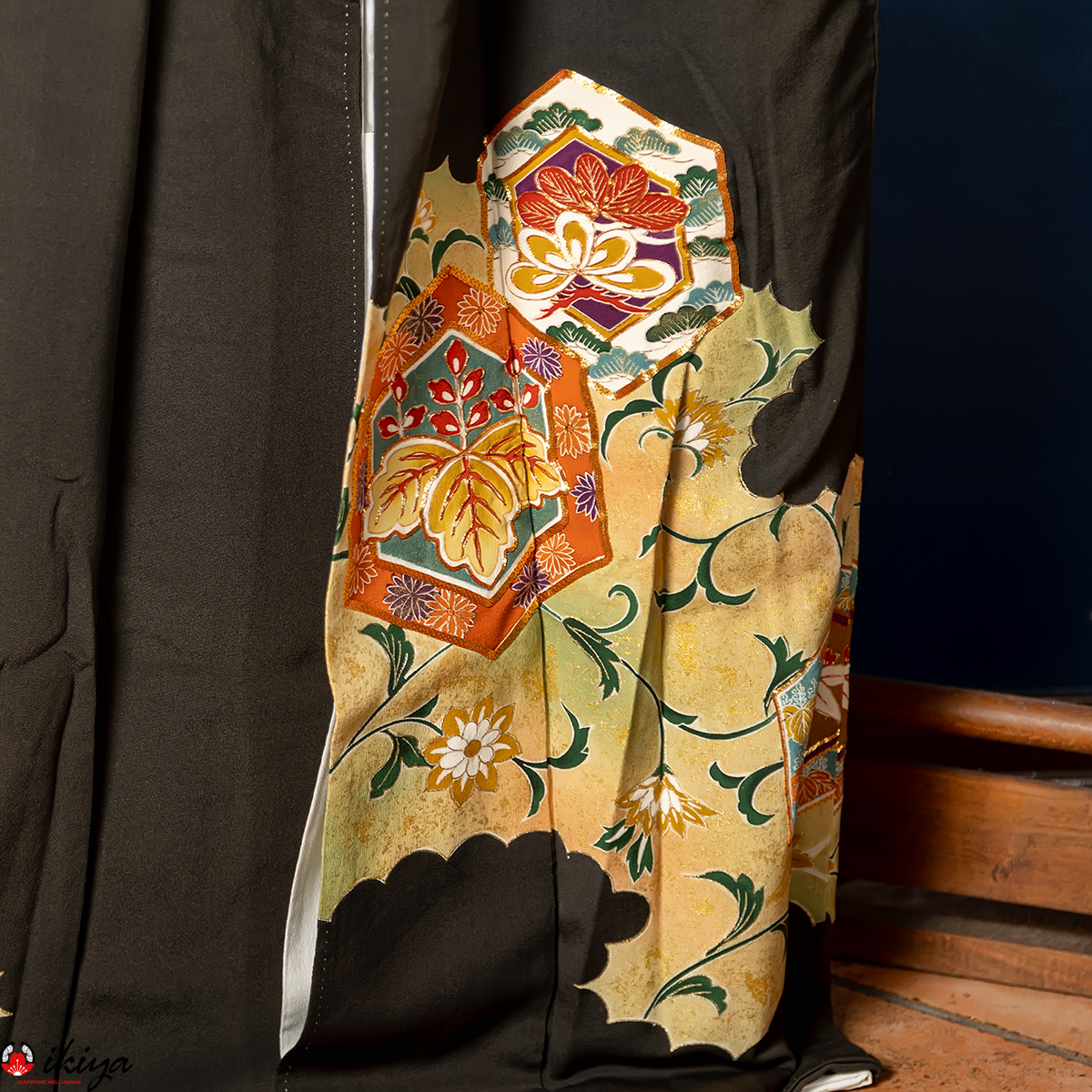
Features: yuzen decoration with various flowers and plants (bamboo, paulownia, pine) and traditional kikko motif (hexagonal “tortoiseshell”), kinkoma gold thread details, 1-5 kamon (family crests)
Measurements:
Sleeve 47 cm
Length 160 cm
Sleeve to sleeve 127 cm
Back 64 cm
Recommended use: evening wear for formal ceremonies, decorative piece when hung, dressing gown or evening dress
Silk kimono and haori should never be washed in water, not even cold. Water damages the fabric, often dyed with natural dyes.
Simply air it out 1-2 times a year and store it folded in a closet. For cleaning, use an artisanal dry cleaner (not industrial).
The kurotomesode is the most formal kimono for married adult women, worn during ceremonies and important events such as weddings, graduations, and receptions. The word kurotomesode is composed of:
- Kuro (black): the color of the silk, symbol of elegance and sobriety.
- Tome (cut): the sleeves are shorter than other kimono, such as the furisode (worn by unmarried girls).
- Sode (sleeve).
The decoration, often very elaborate, is present only on the lower part of the kimono and develops mainly on the left side, which becomes the front when worn.
The kurotomesode features 1 to 5 kamon, family crests on the sleeves and shoulders, indicating the level of formality.
This piece is embellished with yuzen decoration depicting various flowers and plants (bamboo, paulownia, pine) and the traditional kikko motif (hexagonal “tortoiseshell” decoration), one of the most famous and appreciated in Japan, which symbolizes longevity, good luck, and strength. The details are finished in kinkoma gold thread, adding brightness and prestige to the garment.
Yuzen is an ancient dyeing technique dating back to the Edo period: it consists of painting a motif on silk, freehand or with stencils, using rice starch and natural ink. The result is a vibrant and refined decoration with great visual and artistic impact.
Informazioni aggiuntive
Descrizione
This vintage black silk kurotomesode with flowers and kikko motif is a unique piece combining symbolism and tradition. The yuzen decoration depicts various flowers and plants (bamboo, paulownia, pine) and the kikko motif, a hexagonal “tortoiseshell” decoration, one of the most famous and appreciated in Japan, symbolizing longevity, good luck, and strength.
The details are finished in kinkoma gold thread, adding brightness and prestige to the garment.
Entirely handmade in Japan, this kurotomesode is a unique garment, masterfully sewn and painted. It has a double lining (decorated black exterior, white interior, with slight signs of wear not visible from the outside). You can wear it as an evening gown for formal ceremonies, or hang it on a wall as a true work of art.
FAQ
What is a kurotomesode?
The kurotomesode is the most formal kimono for married adult women. It’s always in black silk and has shorter sleeves than other kimono, such as the furisode (for unmarried girls).
The decoration is present only on the lower part and develops on the left side, which becomes the front when worn.
The number of kamon (family crests) on sleeves and shoulders indicates the level of formality (from 1 to 5, where 5 is the highest).
It’s worn during ceremonies and important events, such as weddings, graduations, and receptions.
How do you care for a silk kimono?
Silk kimono should never be washed in water, not even cold. Water damages the fabric, often dyed with natural dyes.
Simply air it out 1-2 times a year and store it folded in a dry closet. For cleaning, use an artisanal dry cleaner (not industrial).
How do you wear a kurotomesode?
The kurotomesode can be worn in a traditional or unconventional way.
Traditional way:
- You need to consider the length and accessories.
- Maru obi or fukuro obi type belts are used, more elaborate and suitable for formal kimono.
- It’s suitable for ceremonies and important events.
Unconventional way:
- It can become a beautiful decorative piece when hung on a wall.
- It can be worn as a dressing gown or evening dress.