
Tokoname Kyusu: history and origin
The city of Tokoname is located on the Chita Peninsula, south of Aichi Prefecture.
This city has been recognized as one of Japan's six ancient kilns, with a centuries-old history and a ceramic production among the finest and most renowned not only in Japan, but worldwide. In fact, as early as the Heian period (794-1185), the inhabitants of Tokoname noticed the unique characteristics of the local clay, rich in iron and other minerals, excellent for building walls and, above all, ceramics ("yakimono"). The word Tokoname literally means "common (toko) clay (name)". Even today, the production of ceramic objects is in the hands of generations of independent artists or local cooperatives that bring together specialized artisans, and is known as "Tokoname-yaki" (常滑焼).
Tokoname teapots
One of Tokoname's specialties is the "kyusu" (急須). Kyusu are traditional Japanese ceramic teapots, whose origins date back to Song-period China. The most common ones are those with a side handle (yokode kyusu), but you can also find them with a handle on the back (ushirode kyusu). The filter, made of perforated ceramic or steel, is inside, usually at the base of the spout. This type of teapot is ideal for preparing Japanese green teas at their best. In fact, in Japan it is normal to make multiple infusions using the same tea leaves, and kyusu are perfect for this preparation method. The wide and slightly flattened shape of the teapot allows the tea leaves to open up evenly and release all their aroma, while the internal filter allows you to pour out every last drop of the infusion, making it possible to have an excellent second brew!
Lightweight and easy to handle, kyusu are made entirely by hand by master potters in different colors, shapes, and techniques. Smaller ones (30-100ml) are used to prepare the finest teas (e.g., gyokuro), while larger ones (150-350ml) can be used daily for all types of tea. The type of filter also changes based on the type of tea you want to steep. Speaking of decorative techniques, the most common are: "mogake" (seaweed is wrapped around the teapot during firing to create unique designs), "inka" (wooden stamps are used to engrave designs on the raw clay), "ezuke" (decorative motifs are engraved and painted to give a three-dimensional effect), etc.
Use and maintenance
Before the first use, soak the teapot in hot water (60-80°C) for about 30-60 minutes. Afterwards, let it dry completely, keeping the lid separate from the body of the teapot. This way, you will have a clean kyusu that is more resistant to stains.
Kyusu are made of ceramic, a living and porous material, and the interior is unglazed. Therefore, they should not be placed over direct fire, in the dishwasher, or in the oven/microwave, and they cannot be washed with soaps and detergents (which are absorbed by the ceramic, thus changing the flavor of the tea). Also, avoid sharp temperature changes.
After use, rinse the kyusu under running water, letting the water flow through the spout towards the inside to remove any tea residue. If necessary, use a small brush or a toothpick to clean the filter. Wipe the outer surface with a clean cloth and then let it dry completely.
Products by category
-
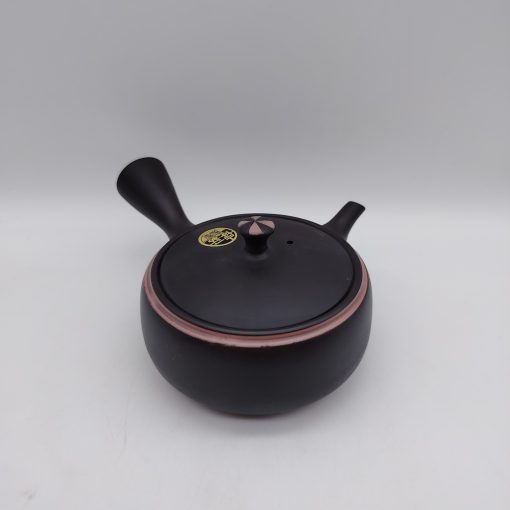
Black ceramic kyusu with pink details – 240ml
€ 85,00 VAT included -

Black Ceramic Kyusu with Stars – 390ml
€ 65,00 VAT included -
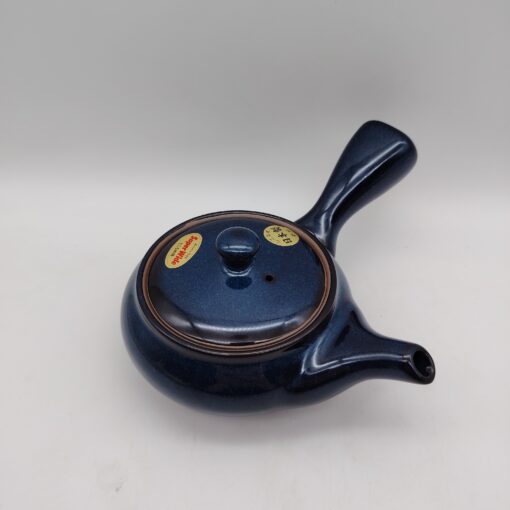
Dark blue Hira-kyusu – 300 ml
€ 65,00 VAT included -
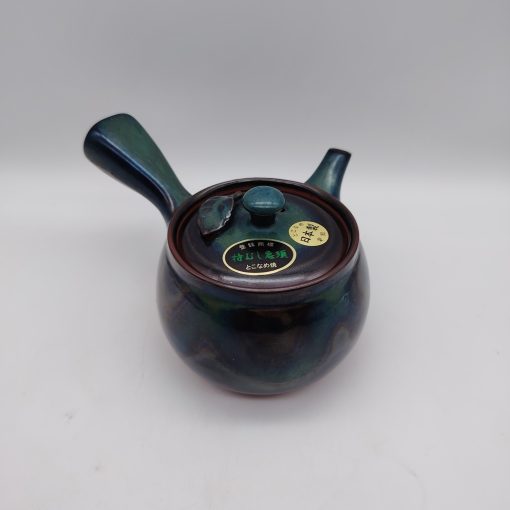
Green ceramic kyusu with small leaf – 380ml
€ 50,00 VAT included -
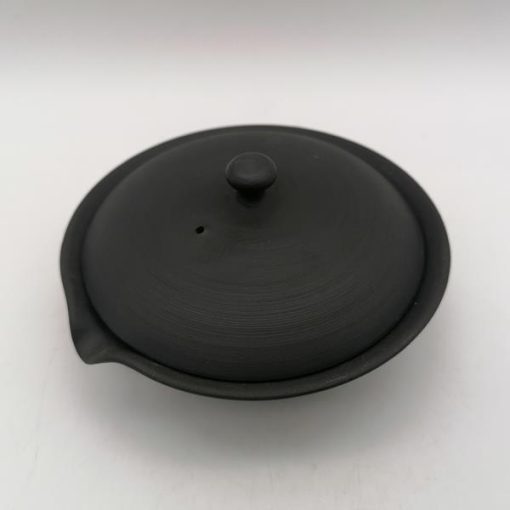
Gyokko Black Shiboridashi
€ 95,00 VAT included -
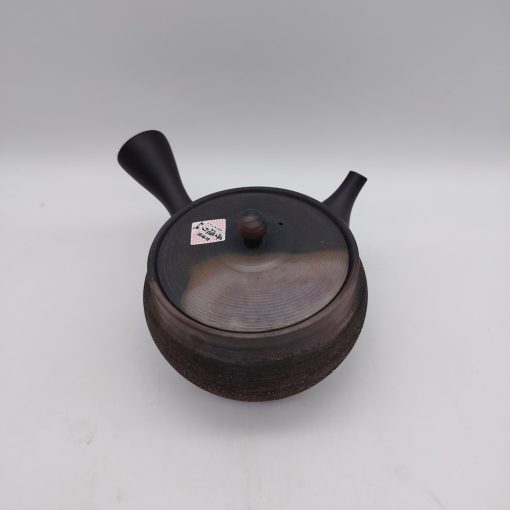
Kyusu Gyokko yohen – 300ml
€ 125,00 VAT included -
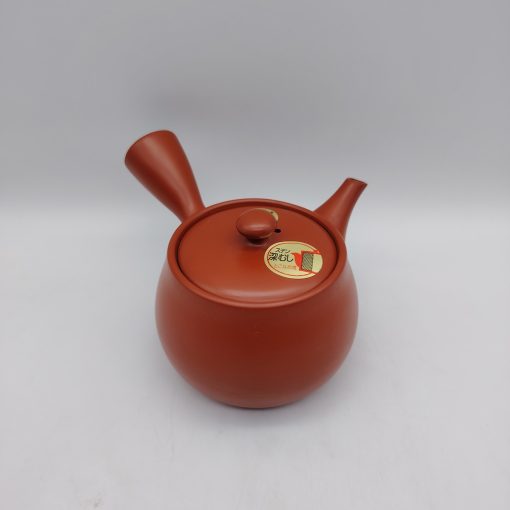
Red Clay Drop-Shaped Kyusu – 350ml
€ 39,00 VAT included -
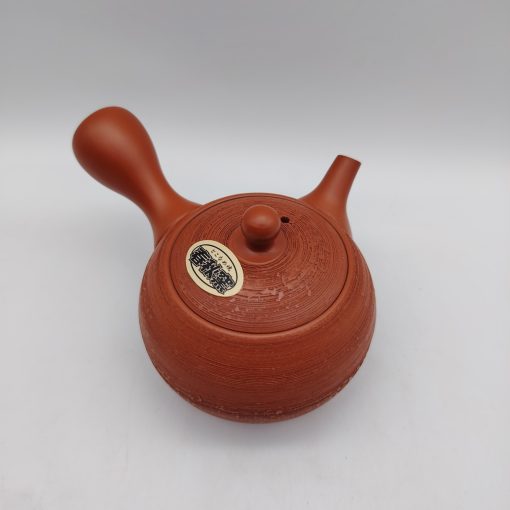
Red Matsukawa Kyusu – 180ml
€ 75,00 VAT included -
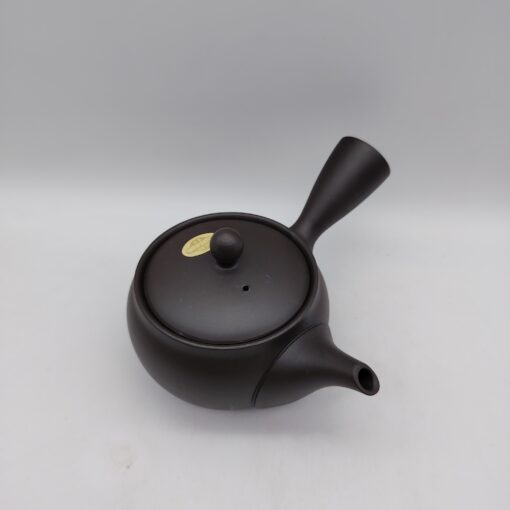
Round black ceramic kyusu – 330ml
€ 65,00 VAT included